Fleet strategy

Dual fleet advantage

One deployment strategy doesn't fit all use cases β€” so we run both swapping and plug & ride, and deploy the right model for your delivery density, shift pattern, and city infrastructure.

Swapping

  • Maximum uptime β€” under 2 min swap
  • Ideal: quick commerce, food delivery
  • High-utilization shift ops
  • Swap station network required
  • Lower battery anxiety risk
VS

Plug & ride

  • Lower total cost of ownership
  • Ideal: fixed shifts, B2B routes
  • Depot-based overnight charging
  • No swap infra dependency
  • Longer per-charge range
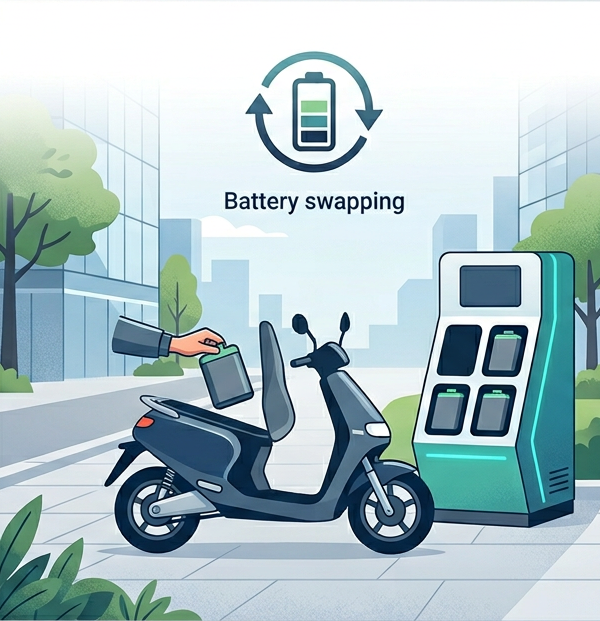
Battery swapping β€” rider at a swap station with an electric scooter

Fleet technology

Battery swapping

Wheeley Swap Series β€” designed for high-utilization operations

ModelWheeley Swap Series
Battery / range75 km / swap
Swap time< 2 minutes
Max speed70 km/h
Best forQuick commerce, high-density delivery

Why swapping wins

For delivery-first, always-on operations

  • Near-zero downtime β€” swap in under 2 min, no wait, no charge anxiety
  • Higher daily utilization β€” riders complete more trips vs plug-charging peers
  • Network scalability β€” swap station density grows with client demand
  • Fleet uptime SLA β€” committed vehicle availability with backup swap capacity
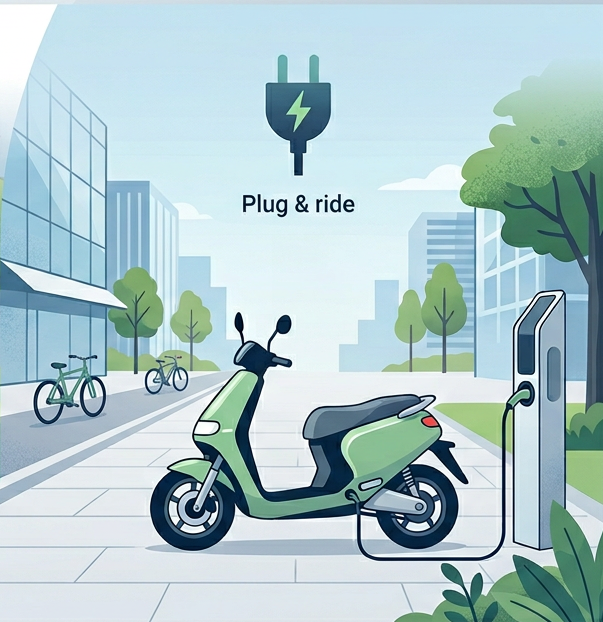
Plug and ride β€” electric scooter charging at a public charging point

Fleet technology

Plug & ride

Wheeley Plug & Ride β€” built for fixed shift operations

ModelWheeley Plug & Ride
Range160+ km
Max speed120 km/h
Charging timeUp to 80% in 45 mins
Best forFixed shift, B2B, scheduled runs

Why plug & ride wins

For predictable shift-based delivery models

  • Lowest TCO β€” no swap station dependency; charge at depot overnight
  • Higher range per charge β€” 160+ km covers most inter-zone fixed routes
  • Rider ownership–ready β€” works for company-owned and rider-owned models
  • Service network β€” Wheeley field support & partners across tier 1 & 2 cities